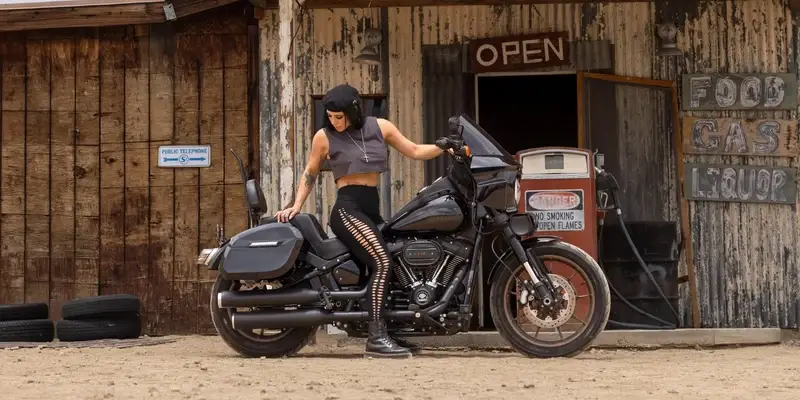
Harley Saddlebags: Understanding Fit, Storage, and Practical Use
Why do some saddlebags work perfectly on one Harley while creating problems on another?
At first glance, motorcycle luggage can seem straightforward. A bag attaches beside the rear wheel, provides extra storage, and gives the rider somewhere to keep equipment. In practice, however, the space around the back of a motorcycle is more complicated than it appears.
The frame, rear suspension, exhaust, fender, turn signals, passenger controls, and mounting points all occupy space. Changes to any of these areas can affect how luggage needs to be positioned.
The way the motorcycle is ridden matters too. Someone using a Harley for short trips around town may need only enough room for a few essentials. A rider spending several days on the road has very different requirements.
Understanding those differences is the starting point for building a practical storage setup.
What Should You Know Before Adding Storage to a Harley?
What makes luggage suitable for one motorcycle but unsuitable for another?
The answer usually begins with the motorcycle itself.
Harley Davidson has produced a wide range of motorcycles over many years. Different models and generations can have different rear dimensions, suspension arrangements, exhaust locations, fender designs, and attachment points.
Because of that, luggage should not be selected solely by its appearance or advertised capacity.
The physical relationship between the motorcycle and the storage compartment is more important.
A suitable setup should leave appropriate space around components that become hot, move during operation, or rotate. It should also remain securely attached when the motorcycle is being ridden.
This is why motorcycle stretched saddlebags cover such a broad range of designs. There is no single shape that works equally well for every motorcycle.
Why Does the Exact Harley Model Matter?
Can't a saddlebag designed for one Harley simply be transferred to another Harley?
Not necessarily.
Motorcycles that look similar can have meaningful differences underneath the bodywork. The location of the shocks, exhaust, fender supports, and mounting points can change the space available beside the rear wheel.
Model year can matter as well.
A motorcycle that carries the same family name may have gone through design changes over its production life. That means photographs of another bike with luggage installed are useful for visual reference, but they should not be treated as proof of compatibility.
The more precise the fitment information, the easier it becomes to determine whether a particular storage system is appropriate.
How Do You Check Saddlebag Fitment?
What should you actually inspect before installing luggage?
Start at the rear of the motorcycle and identify everything occupying the area where the bag will sit.
Check the:
- Mounting points
- Rear suspension
- Exhaust system
- Rear wheel
- Fender
- Turn signals
- Passenger foot controls
- Existing accessories
Then consider the dimensions of the proposed luggage.
Width and height are only part of the calculation. The position of the mounting points determines where those dimensions will sit relative to the motorcycle.
Clearance should also be considered while the motorcycle is operating, not only while it is parked.
Why Is Exhaust Clearance Important?
Can a saddlebag be too close to the exhaust even if it physically fits?
Yes.
Exhaust components become extremely hot during operation. The available space around them varies according to the motorcycle and exhaust configuration.
This becomes particularly important when a Harley has an aftermarket exhaust system. A luggage arrangement that worked with the original exhaust may have different clearance after the exhaust has been replaced.
The safe approach is to evaluate the complete motorcycle as it currently exists rather than relying on assumptions based on an unmodified example.
Can Suspension Movement Affect Luggage?
Does the position of the saddlebag change while riding?
The motorcycle's rear suspension moves as it responds to bumps and changes in road surface.
That means a clearance check performed while the motorcycle is stationary does not tell the entire story.
The luggage should be positioned so that normal movement does not bring it into contact with the suspension, wheel, or other components.
This is one of the reasons mounting design matters just as much as the physical size of the storage compartment.
Do Turn Signals Change Saddlebag Placement?
Why do rear turn signals sometimes become an issue when adding luggage?
Their position can overlap with the space occupied by certain saddlebag designs.
Depending on the motorcycle, luggage dimensions, and mounting arrangement, the original signal location may provide adequate room or may require additional consideration.
This is particularly important when modifying a motorcycle that already has other accessories installed.
The goal is not simply to make the luggage fit. The complete arrangement needs to preserve the motorcycle's required equipment and appropriate visibility.
Why Are Softail Fitment Questions So Specific?
Does saying “I have a Softail” provide enough information to choose luggage?
Usually, more information is helpful.
The Softail family contains many different motorcycles and configurations. Rear suspension, exhaust placement, fender design, and mounting arrangements can differ.
That is why discussions around Harley throw over Softail saddlebags need to consider the individual motorcycle rather than treating the entire Softail family as one identical platform.
A better question is:
What exact Softail model and year is being fitted, and what equipment is already installed?
That approach provides much more useful information than the family name alone.
Why Can Sportster Storage Require Extra Attention?
Does a smaller motorcycle automatically make luggage installation easier?
Not always.
Sportster motorcycles can have limited room around the rear section, making the relationship between the luggage and surrounding components particularly important.
The location of the rear shocks, exhaust, fender, and signals can affect the available space.
For this reason, choosing Harley extended Sportster saddlebags involves more than finding a compact bag. The dimensions and mounting arrangement need to work with the specific motorcycle.
How Much Storage Is Enough?
Does a rider really need the largest luggage available?
Usually not.
Storage should reflect what you actually carry.
Someone commuting to work might need space for:
- Rain gear
- Gloves
- Small tools
- Personal belongings
- Charging equipment
A weekend rider may add clothing and additional equipment.
For a longer trip, the list can grow to include several changes of clothing, toiletries, electronics, tools, and weather protection.
The useful question is therefore not:
“How much storage can I get?”
It is:
“What do I normally need to carry?”
That distinction can prevent riders from adding unnecessary size and weight to the motorcycle.
Does Capacity Tell You How Much You Can Carry?
Is a large compartment automatically capable of carrying a large load?
No.
Physical capacity and permitted weight are different things.
A storage compartment may have enough physical space for a considerable amount of equipment, but the motorcycle and luggage system still have applicable load limits.
Dense objects such as tools and equipment can add weight quickly without occupying much room.
For that reason, riders should check the applicable load information for their motorcycle and luggage rather than using available space as the measure of how much weight can be carried.
What Is the Difference Between Hard and Soft Luggage?
Does the construction of a saddlebag change the riding experience?
It can change how the storage behaves.
Hard luggage maintains its shape and provides a structured compartment. It can be useful when riders want their belongings stored inside a rigid enclosure.
Soft luggage is more flexible and can suit riders who prefer a different mounting arrangement or want luggage that can adapt to its contents.
The choice depends on the motorcycle and the rider.
A daily commuter may have different priorities from someone preparing a motorcycle for extended touring. Appearance, accessibility, weather exposure, removal requirements, and storage habits can all influence the decision.
There is no universal answer that makes one construction better for everyone.
Does Mounting Hardware Really Matter?
Is the bag itself more important than the way it attaches?
The mounting system is a major part of the luggage.
A saddlebag needs to remain properly positioned while the motorcycle is moving. Depending on the motorcycle and luggage design, this may involve brackets, supports, dedicated attachment points, straps, or other hardware.
Existing motorcycle accessories can also affect the available mounting area.
Before installation, it is worth determining exactly where the luggage attaches and whether the mounting system leaves sufficient clearance around the surrounding components.
A secure attachment is not just about preventing the bag from falling off. Its position can affect wheel, suspension, exhaust, and passenger clearance as well.
Are Removable Saddlebags Better?
Should luggage stay on a Harley all the time?
That depends entirely on how the motorcycle is used.
A commuter may appreciate having storage available every day.
Another rider may prefer a cleaner motorcycle when riding locally and install luggage only for weekend trips.
Removable systems can therefore make sense for riders whose needs change throughout the week.
Permanent luggage can make more sense when storage is an everyday requirement.
The better question is not which arrangement is superior, but how often the rider expects to use the luggage.
What Changes When You Use a Harley for Touring?
Does long distance riding change what you need from storage?
It usually does.
A short ride might require only a few essentials. A multi day journey introduces clothing, personal items, weather equipment, tools, chargers, and other supplies.
Organization becomes increasingly important as the duration of the trip increases.
Instead of placing everything into one large compartment, riders may find it easier to separate items according to how frequently they are needed.
Frequently accessed equipment should be easy to reach. Items needed only at the destination can remain packed away.
This simple approach can make stops and roadside adjustments considerably less frustrating.
Can Saddlebags Work With Other Motorcycle Luggage?
Are side compartments enough for every type of ride?
Not necessarily.
Some riders use additional luggage when the trip requires more storage. The purpose is not always to carry more for the sake of carrying more. Different storage locations can make it easier to separate clothing, tools, electronics, and other equipment.
The broader category of motorcycle luggage bags for long trips includes different approaches to carrying equipment, which can be useful when a motorcycle needs more than one storage area.
A good luggage arrangement should remain practical rather than becoming unnecessarily complicated.
How Does the Seat Fit Into the Overall Setup?
Why should seating be considered when discussing luggage?
Because rider and passenger space are part of the same motorcycle layout.
A saddlebag should not interfere with the way the rider sits or with the normal position of a passenger.
For riders preparing a motorcycle for longer journeys, the relationship between storage and comfort becomes even more noticeable. A change in motorcycle seats, for example, can influence the overall riding position and the way other accessories are used.
This is why it is useful to think about the motorcycle as one complete system rather than choosing each accessory independently.
Do Fairings Have Anything to Do With Luggage?
Why mention fairings in an article about saddlebags?
Because motorcycle modifications often serve a common riding purpose.
Someone preparing a Harley for highway travel may be thinking about storage, rider comfort, wind protection, and equipment at the same time.
In that situation, fairings for motorcycle may become part of the wider configuration even though they serve a different function from luggage.
The important point is that accessories should work together without creating new fitment or usability problems.
What Are the Most Common Problems Riders Overlook?
What mistakes are easiest to make when adding storage?
Choosing Based Only on Appearance
A saddlebag may look appropriate on another Harley without having the same fit on yours.
Ignoring the Model Year
Small design changes can affect mounting and available clearance.
Measuring Only the Bag
The motorcycle's mounting position determines where the bag actually sits.
Forgetting Suspension Movement
A parked motorcycle does not show every position the rear suspension can reach.
Overlooking Exhaust Heat
The exhaust needs to be considered before finalizing luggage placement.
Assuming More Capacity Is Always Better
Additional storage can also mean additional size and weight.
Forgetting Existing Modifications
Aftermarket exhausts, seats, brackets, signals, and other equipment can change the available space.
What Questions Should You Ask Before Installing Harley Luggage?
Would a simple set of questions prevent most avoidable mistakes?
Start with these:
What exact Harley model do I have?
The family name may not provide enough information.
What year is the motorcycle?
Year specific differences can affect fitment.
Where will the luggage attach?
Understand the mounting points before purchasing.
What is located around that mounting area?
Check the exhaust, shocks, wheel, fender, signals, and passenger controls.
How much do I actually need to carry?
Choose capacity according to real use.
How heavy will the contents be?
Check the applicable load limits.
Will I ride with a passenger?
Passenger space can affect luggage placement.
Do I want permanent or removable storage?
Your riding routine can answer this.
Are there aftermarket modifications?
Existing changes can alter clearance and mounting requirements.
These questions turn saddlebag selection from an appearance based decision into a fitment and usability decision.
What Makes a Good Harley Luggage Setup?
Is there one perfect saddlebag arrangement for every Harley rider?
No.
A useful setup is one that matches the motorcycle and the rider's actual requirements.
For one rider, that might mean compact storage for everyday essentials. For another, it might mean larger compartments for extended travel. Someone else may prioritize removable luggage because the motorcycle serves different purposes throughout the week.
The important elements remain consistent: proper fitment, adequate clearance, sensible capacity, secure mounting, appropriate weight, and compatibility with the way the motorcycle is ridden.
Once those fundamentals are understood, the appearance and style of the luggage become much easier to evaluate.
Final Thoughts
Saddlebags may look like simple storage compartments, but their relationship with a Harley is more complicated than it first appears.
The motorcycle's model, year, frame, suspension, exhaust, rear wheel, signals, passenger controls, and existing accessories all contribute to the final fit.
The rider's habits matter just as much.
Someone who spends most of the week commuting will approach storage differently from someone who regularly crosses state lines on multi day trips.
Rather than beginning with a particular bag, begin with the motorcycle and the problem you are trying to solve.
How much do you need to carry?
Where can the luggage safely sit?
How will it be mounted?
What components need to remain clear?
How often will the storage be used?
Those questions provide a much stronger foundation for choosing motorcycle luggage that becomes a useful part of the Harley rather than simply another accessory attached to it.